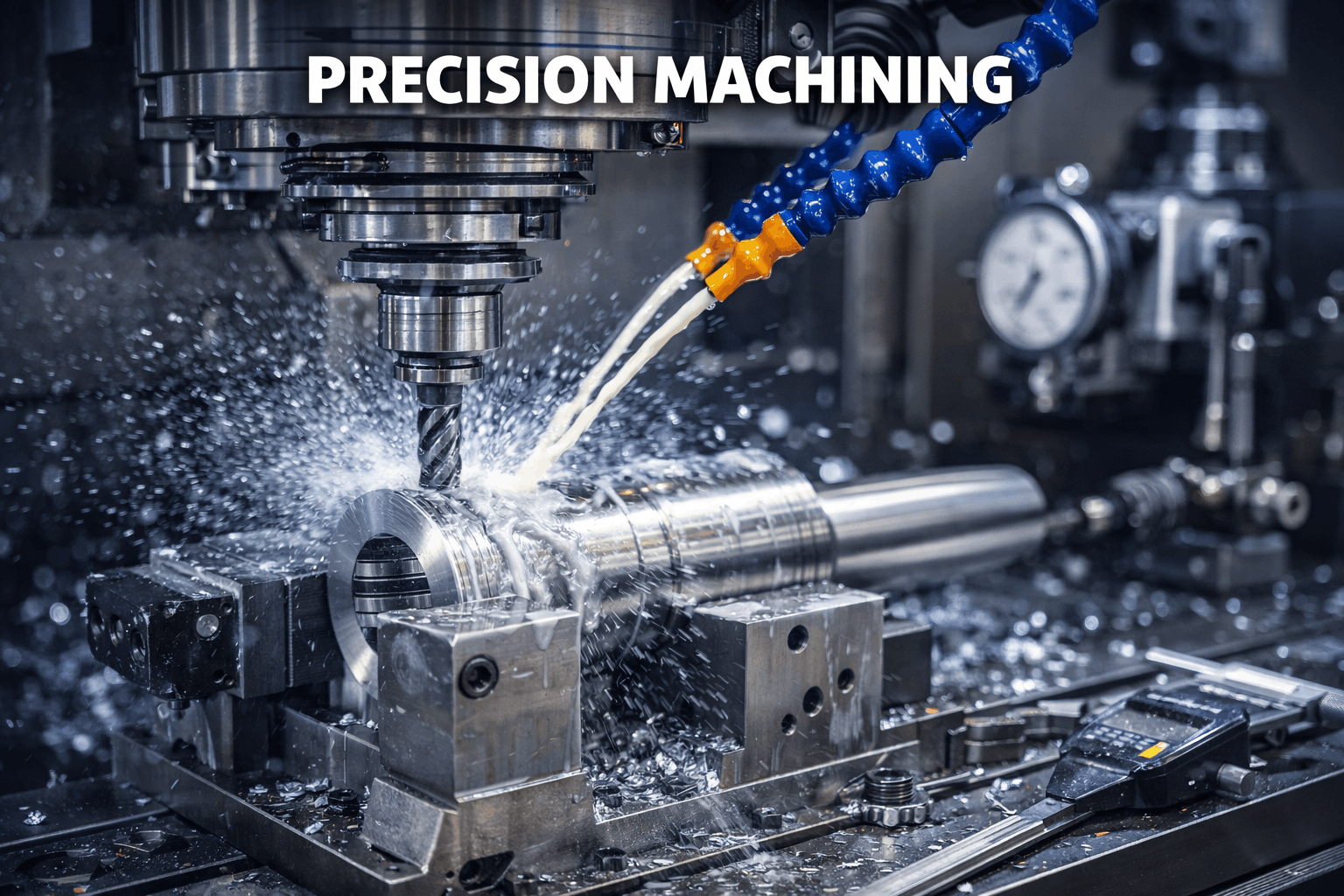
Savegen Engineering positions itself as a specialist provider in precision machining, combining advanced manufacturing technologies, process expertise, and quality-driven practice to serve demanding industries. Precision machining is the cornerstone of modern manufacturing where tolerances, surface finishes, and repeatability determine product performance, safety, and lifecycle costs. This essay examines Savegen Engineering’s specialization in precision machining, detailing the services offered, the technical capabilities and processes deployed, quality assurance and inspection strategies, materials and application domains served, supply-chain and production management practices, and how the company’s approach supports customer outcomes such as reduced time-to-market, improved product reliability, and cost-effective scalability.
Savegen Engineering’s core value proposition centers on delivering highly accurate, repeatable machined components and assemblies for clients that require tight tolerances and reliable performance
A quality-first culture that couples statistical process control (SPC), calibrated metrology, and ISO-aligned management systems to ensure conformity to specifications.
Specializations
Expertise in both conventional and advanced machining methods, allowing selection of the most efficient, precise process for each part.
Integration of design-for-manufacture feedback early in the project lifecycle to reduce production complexity and total cost.
Technical Capabilities and Equipment
A modern precision machining operation like Savegen’s integrates a broad array of equipment, software, and skilled personnel:
Grinding Machines: Surface, cylindrical, and centerless grinders with automated loading for consistent finishing.
EDM Equipment: Wire EDMs with fine-pitch wire and high-stability power supplies; sinker EDM with fine control for intricate cavities.
Metrology and Inspection Systems: Coordinate measuring machines (CMMs), laser scanners, form testers, surface profilometers, optical comparators, and in-process probing systems to verify dimensions and surface quality.
CAM/CAD Systems and Simulation: Advanced CAD/CAM for toolpath optimization, collision avoidance, and virtual verification, reducing trial-and-error and preserving expensive tooling and machine time.
Automation and Workholding: Robotic loading, pallet systems, and custom fixtures to increase throughput, reduce human error, and minimize setup variability.
Process Control and Quality Assurance
Precision machining at the Savegen level relies on rigorous process control to guarantee that parts meet design intent and regulatory requirements:
Documented Process Planning: Work instructions, first-article inspection plans (FAI), process flow diagrams, and capability studies (Cp/Cpk) define production readiness.
Statistical Process Control (SPC): Monitoring critical dimensions and process indicators to detect drift early and implement corrective action before nonconforming product is produced.
In-Process Inspection: Use of machine-mounted probes, offline CMM checks, and go/no-go fixtures to verify dimensions throughout production, reducing scrap and rework.
Traceability and Documentation: Material certifications, lot tracking, inspection records, and change control managed through a quality management system (often ISO 9001/AS9100 for aerospace clients).
Continuous Improvement: Root-cause analysis for any nonconformance (e.g., FMEA, 8D reports), ongoing tooling and fixturing optimization, and operator training to reduce variation and cost over time.
Materials and Surface Treatment Expertise
Precision machining covers a broad materials spectrum; Savegen typically machines:
Metals: Aluminum and its alloys, stainless steels, tool steels (hardened/unhardened), titanium, Inconel and other nickel-based superalloys, copper and its alloys, brass, and various bearing steels.
Plastics and Polymers: Engineering plastics such as PEEK, PTFE, UHMW, and acetal for lightweight or chemically resistant components.
Composite and Exotic Materials: With appropriate tooling and process parameterization, composites and ceramic-like materials for specialized applications.
Surface treatments and heat treatments are coordinated to achieve mechanical properties and surface performance: case hardening, quenching and tempering, nitriding, anodizing, phosphate coating, electroless nickel plating, hard chrome, and specialized corrosion protection. Knowledge of how heat treatment affects tolerances and the need for post-process machining is integral to delivering dimensionally accurate, treated parts.
Industry Applications and Compliance
Savegen’s precision machining services align with industries that demand high reliability and strict regulatory compliance:
Aerospace and Defense: Structural components, engine parts, hydraulic manifolds, and flight-critical hardware that require strict traceability, special process controls, and adherence to aerospace standards (e.g., AS9100).
Medical Devices and Instruments: Surgical instruments, implants, and diagnostic components requiring biocompatible materials, clean-room assembly, and medical-grade documentation.
Energy and Power Generation: Parts for turbines, valves, and downhole tools that require high-temperature and wear-resistant materials and finishes.
Automotive and Motorsport: Precision engine components, transmission parts, and custom drivetrain elements where performance and weight optimization are crucial.
Industrial Equipment and Instrumentation: Valves, sensors, actuators, and precision fixtures used in process industries.
Savegen supports regulatory needs by maintaining appropriate certifications, material traceability, and process documentation necessary for customer audits and regulated sectors.
Engineering Collaboration and Design for Manufacturability (DFM)
A competitive advantage in precision machining derives from early engineering collaboration. Savegen typically offers:
DFM reviews to simplify geometries, consolidate parts, select appropriate tolerances, and recommend materials and surface treatments that reduce cost while preserving function.
Prototyping support to validate designs and enable iterative refinement before high-volume production.
Reverse engineering and tight tolerance replication services when original design data is limited.
Feasibility studies and costing analyses that help customers evaluate alternatives (e.g., machining vs. additive manufacturing hybrid approaches) and make informed decisions.
Supply-Chain, Lead Times and Production Scalability
Savegen’s operations balance responsiveness and efficiency:
Prototyping and low-volume: Short lead-time capabilities enabled by flexible scheduling and prioritized setups for rapid design verification.
Medium- to high-volume: Investment in fixtures, automation, and multi-machine balancing to lower unit costs while maintaining quality.
Vendor management: Strategic partnerships for heat treatment, plating, and specialized testing services to ensure consistent lead times and quality.
Inventory strategies: Kanban, consignment, or JIT models tailored to customer demand profiles to reduce customer WIP and logistics costs.
Sustainability and Safety
Industry best practices increasingly incorporate environmental and workplace safety considerations:
Material waste reduction through nested programming, scrap minimization, and regrind/reuse streams for certain alloys.
Efficient coolant and filtration systems to reduce disposal volume; adoption of biodegradable cutting fluids where appropriate.
Worker safety via machine guarding, ergonomic workstations, and training protocols to minimize hazards from heavy parts, sharp chips, and high-speed tooling.
Emerging Technologies and Future Directions
To stay competitive, Savegen invests selectively in new technologies:
Adaptive machining and in-process feedback: Closed-loop controls using real-time sensor data to adjust feeds/feeds and preserve tolerances under thermal drift or tool wear.
Automation and lights-out manufacturing: Robotic part handling, automatic tool changers, and pallet systems to increase throughput and operate unattended during off-hours.
Hybrid manufacturing: Combining subtractive machining with additive processes (metal AM) to create near-net shapes that reduce material removal for difficult alloys.
Digitalization: MES integration, digital twins, and Industry 4.0 practices to improve traceability, predict maintenance needs, and optimize production schedules.
Customer Outcomes and Competitive Differentiators
Savegen’s precision machining specialization produces tangible customer benefits:
High fidelity to specification, reducing field failures, warranty costs, and rework.
Faster development cycles through integrated prototyping and DFM input.
Cost savings from reduced setups, optimized toolpaths, and consolidated operations.
Risk mitigation via documented processes, material traceability, and compliance readiness.
Flexibility to support a wide array of industries and production volumes.
Precision machining is both a craft and a systems discipline, requiring a combination of high-quality machinery, skilled personnel, strict process control, and collaborative engineering. Savegen Engineering’s specialization emphasizes multi-axis machining, Swiss-type turning, grinding, EDM, and comprehensive secondary services, supported by robust quality systems and engineering collaboration. Through careful process planning, investment in metrology and automation, and a focus on DFM and customer outcomes, Savegen delivers precision components that meet stringent tolerances and regulatory demands while optimizing cost and lead time. For industries where accuracy, reliability, and traceability are paramount, Savegen Engineering’s precision machining capabilities provide a practical route from concept to compliant, market-ready products.
SERVICE DETAILS
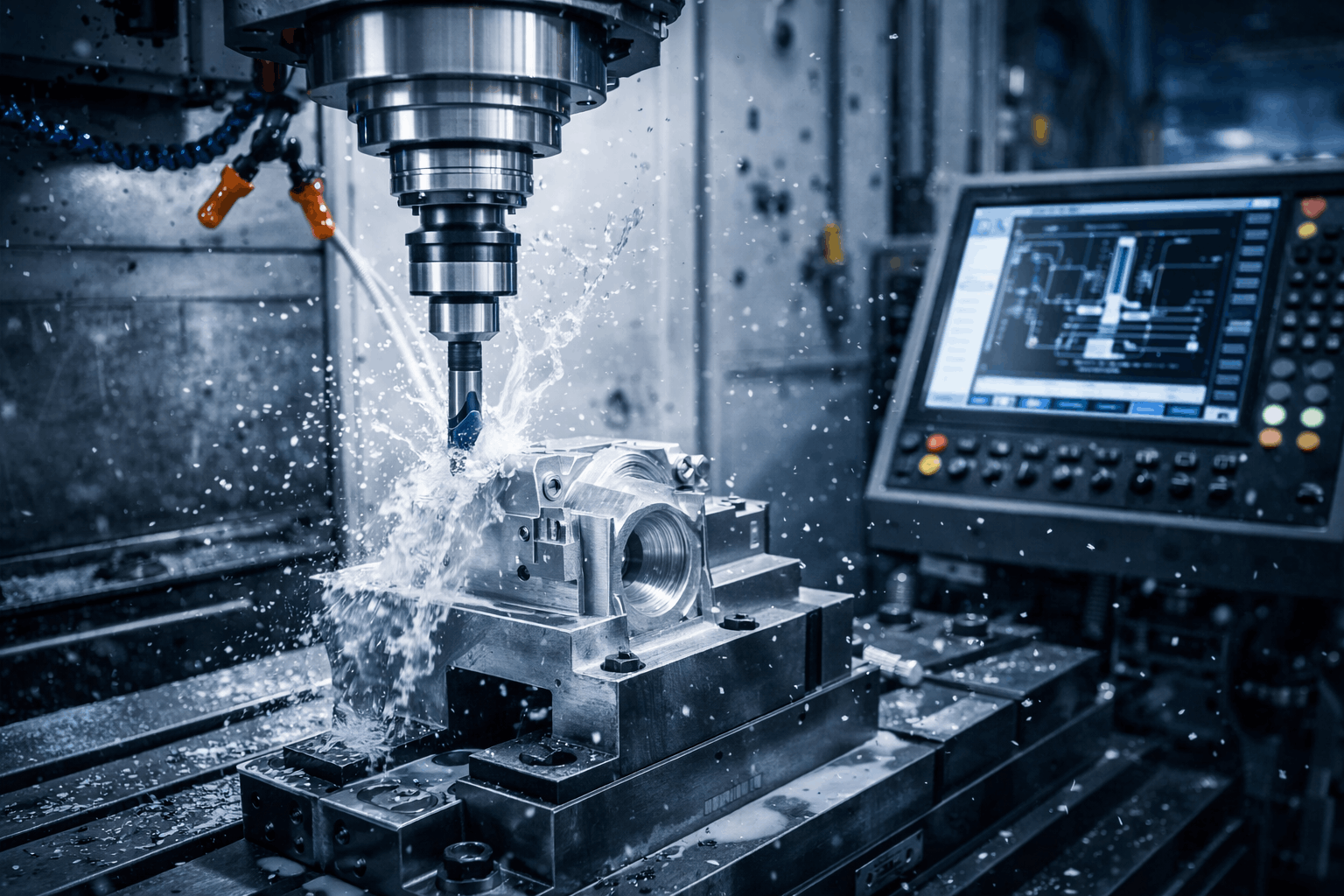
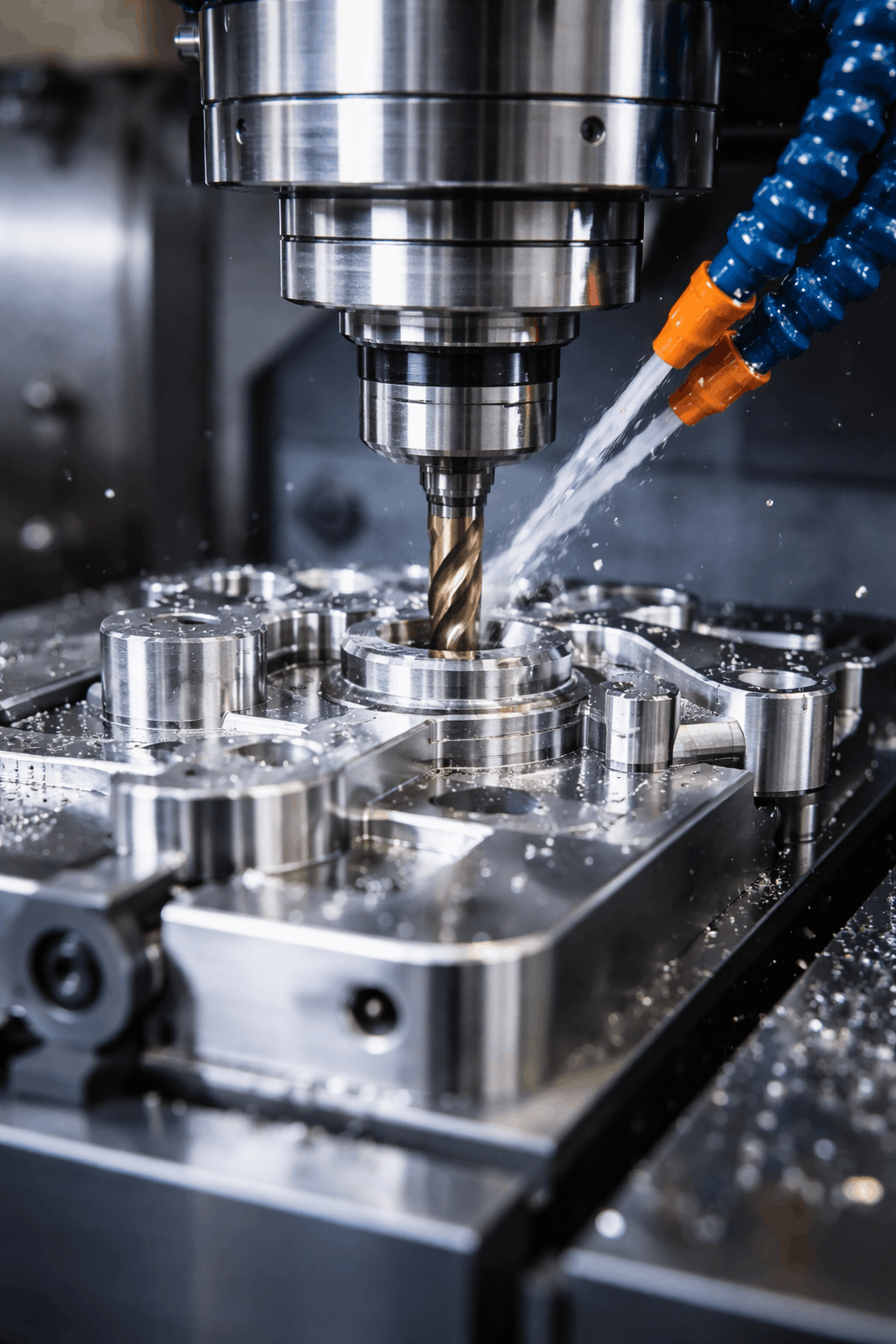
Savegen uses multi-axis CNC milling (3-, 4-, and 5-axis) and CNC turning centers to produce complex geometries, contoured shapes, and precision features. Multi-axis capability permits machining of intricate parts in fewer setups, improving geometric accuracy and reducing fixture and handling costs. This specialization supports components such as aerospace brackets, hydraulic valve bodies, and medical device housings.
Swiss-Type (Sliding Headstock) Machining For high-precision, small-diameter components—commonly found in medical devices, instrumentation, and micro-mechanics—Swiss-type lathes offer tight concentricity, consistent diameters, and complex feature creation in a single pass. Savegen’s Swiss machining capability addresses micro-toleranced turned parts with short cycle times and excellent repeatability.
Where surface finish and dimensional accuracy exceed milling or turning capabilities, precision cylindrical and surface grinding, as well as superfinishing, are applied. These processes achieve low surface roughness, precise roundness, and strict dimensional limits required for bearing journals, piston rods, and mating surfaces.
EDM (Electrical Discharge Machining) and Wire EDM For extremely hard materials or geometries that are difficult to machine conventionally—thin slots, sharp internal corners, and complex electrode-shaped features—EDM processes are used. Wire EDM produces high-accuracy contours and tight corner radii, while die-sinking EDM is applied for cavity details in toolmaking and mold inserts.
Savegen provides in-house tooling and fixture design/manufacture to ensure process stability and reduce setup time. Rapid prototyping and prototype machining capabilities allow design validation and functional testing before entering larger production runs.
Secondary Operations and Value-Added Services Precision machining often requires secondary operations such as heat treatment, plating, anodizing, shot peening, laser marking, assembly, and balancing. Savegen coordinates or manages these operations, acting as a single-point supplier for finished components or assemblies.
High-precision 3–5 axis mills with thermal compensation, high-speed spindles, and rigid construction to maintain tolerances.
CNC Lathes: Multi-turret and multi-spindle lathes, including Swiss-type machines, for complex turned parts with sub-millimeter accuracy.
Have you any question or querry
GET FREE
CONSULTATION
WITH OUR AGENT