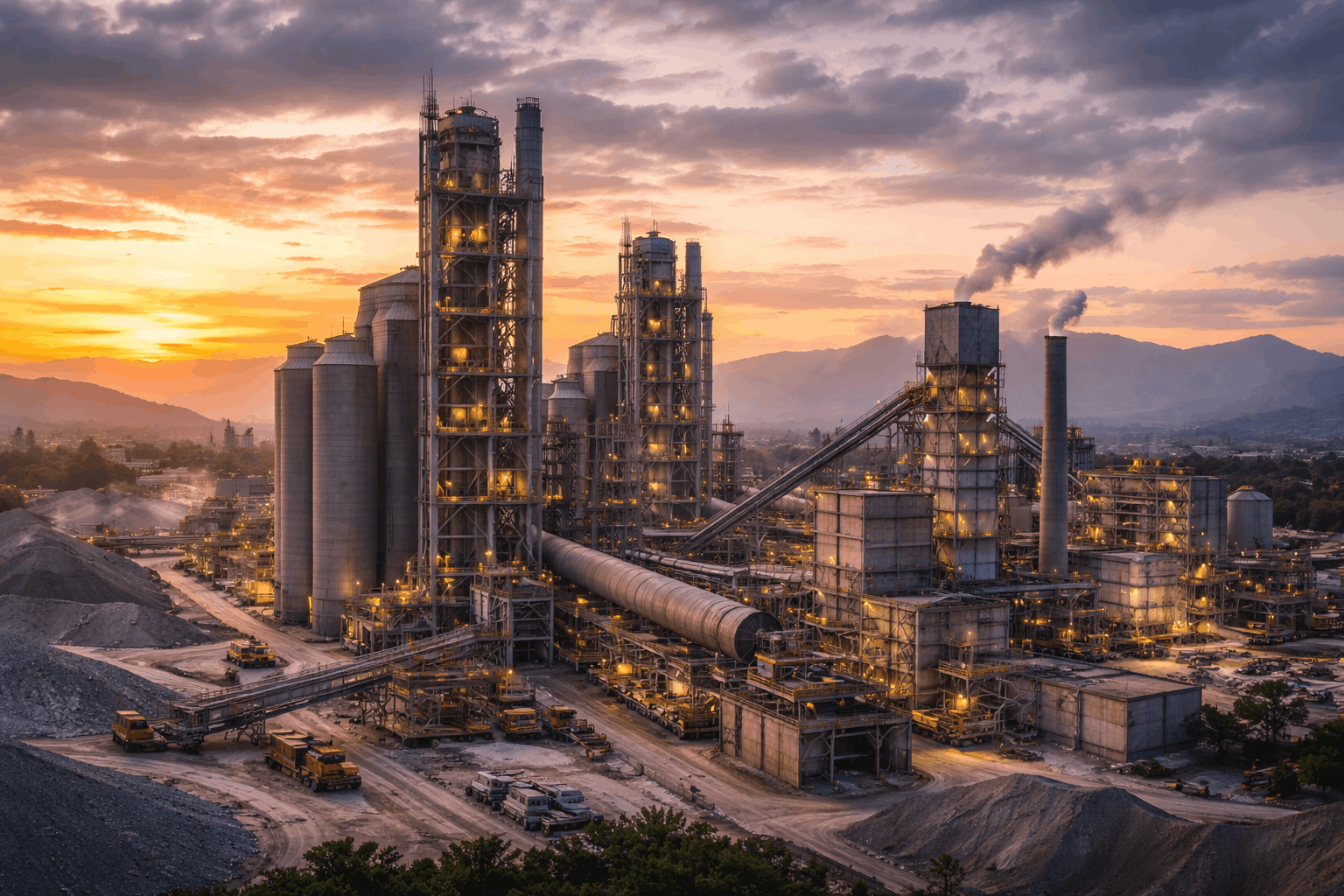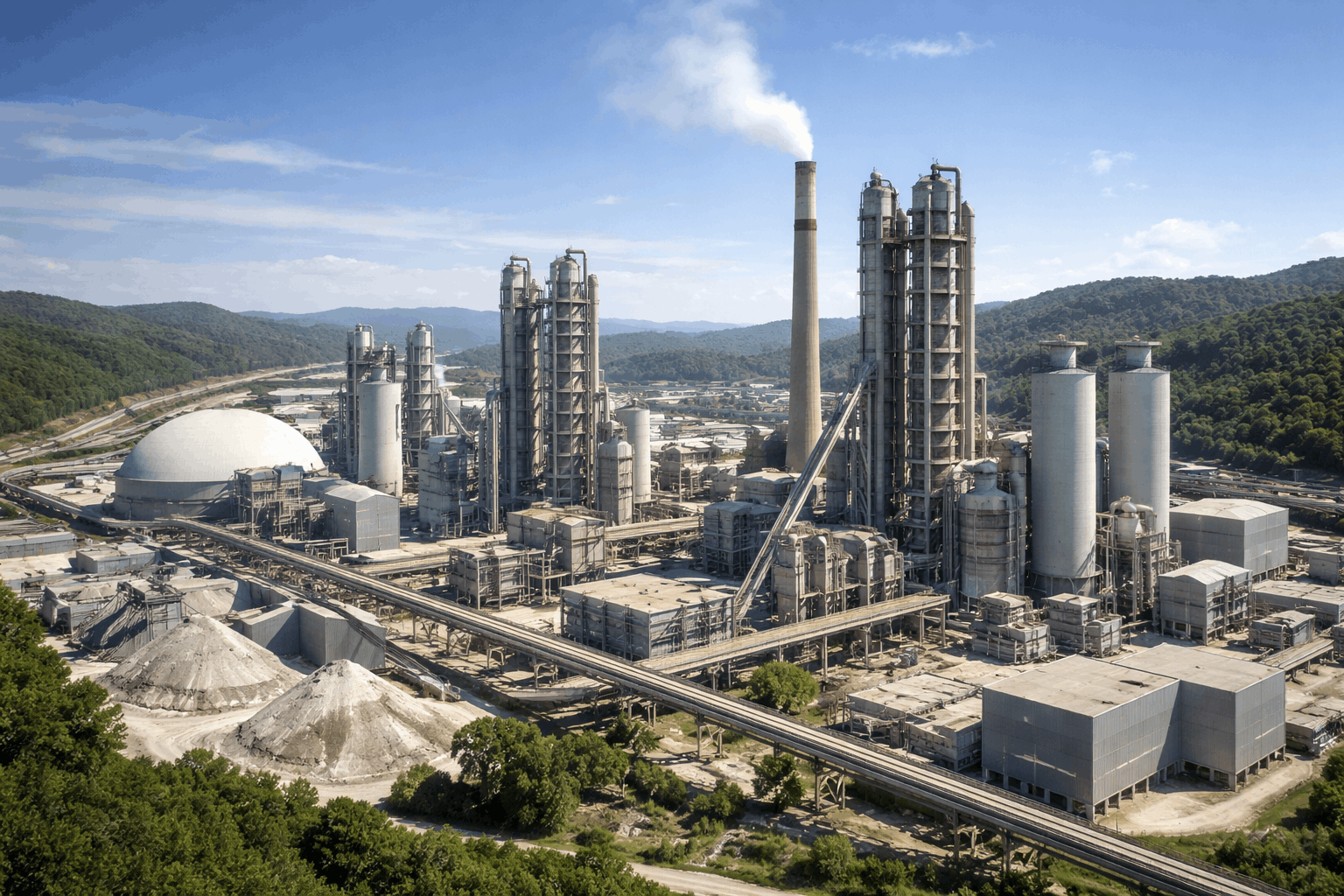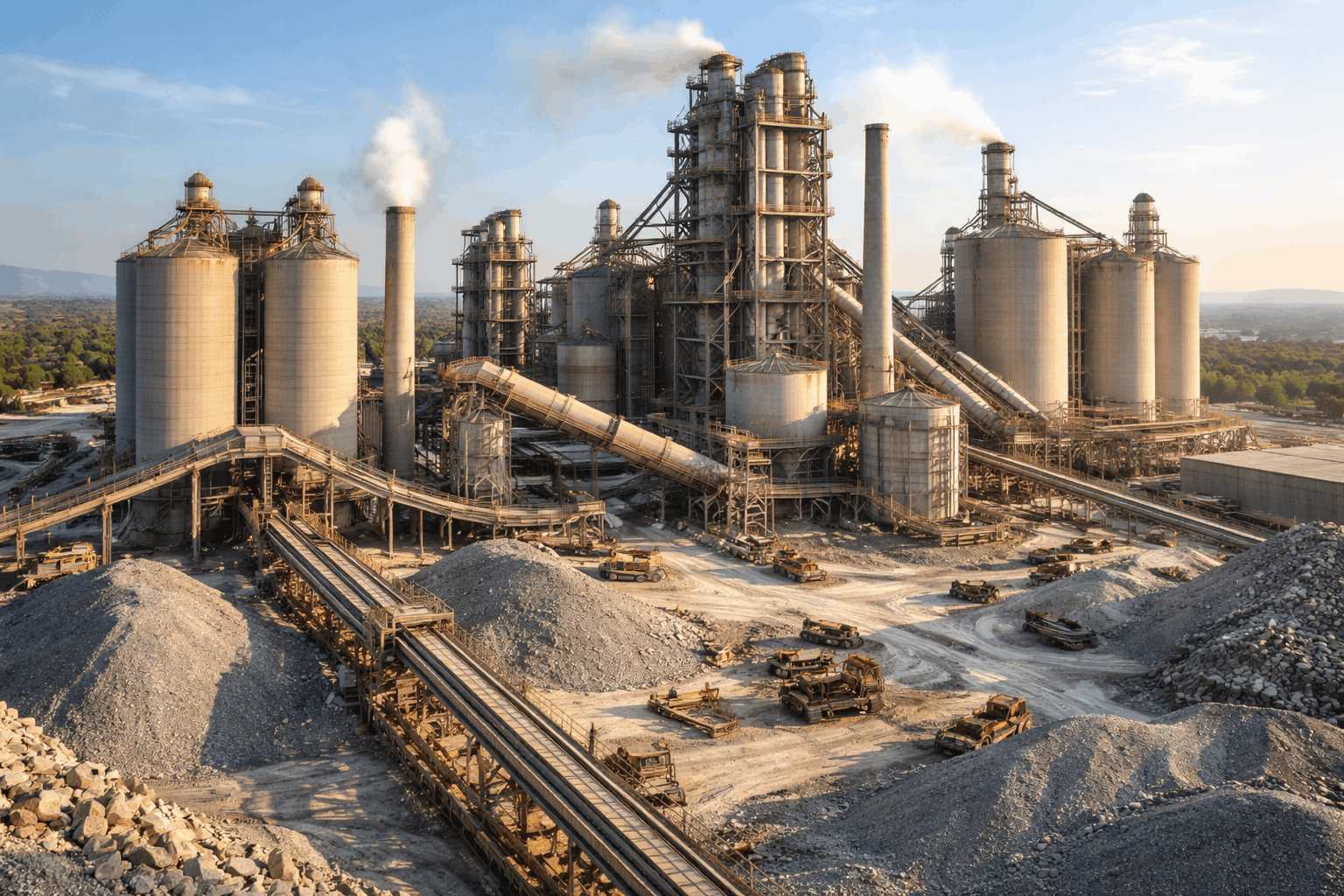
Savegen Engineering positions itself as a specialist engineering services provider focused on the cement-plant sector, offering a combination of technical expertise, project delivery capability, and lifecycle support tailored to the heavy-industrial environment of cement manufacturing. The cement industry is capital- and energy-intensive, with complex integrated processes spanning raw-materialhandling, pyroprocessing, clinker cooling, finish grinding, material handling, emissions control, and utilities. Effective engineering services for this sector must deliver reliability, efficiency, regulatory compliance, and safety while reducing operating costs and environmental footprint. This essay outlines Savegen Engineering’s specialisations and the detailed services it offers to cement-plant operators, situating those offerings within the operational and commercial realities of contemporary cement production.
Cement production remains a cornerstone of construction and infrastructure development worldwide. However, plant operators face multiple pressures: rising energy prices, stringent emissions and environmental regulations, fluctuating feedstock quality, market-driven capacity adjustments, the need for digital transformation, and demands for cost control. These pressures create opportunities for specialist engineering firms to add measurable value through targeted interventions: improving process efficiency, reducing downtime, upgrading or retrofitting legacy equipment, implementing emissions-reduction technology, and providing robust maintenance and spare-parts strategies.
Savegen Engineering’s roles in this environment are multifold: problem-solver for chronic operational issues, partner for greenfield and brownfield projects, provider of lifecycle services for critical assets, and adviser on regulatory compliance and sustainability initiatives. The company’s specialisation is framed around the key production areas of a cement plant and the engineering disciplines needed to optimize them.
Specializations
Detailed process audits and diagnostic studies to identify bottlenecks and inefficiencies across the raw mill, kiln, cooler, and finish-mill circuits.
Mass- and energy-balance modeling to quantify losses and opportunities for energy recovery or fuel substitution.
Environmental Technology and Regulatory Compliance
Emissions control engineering: design and retrofit of baghouses, electrostatic precipitators, selective catalytic/non-catalytic reduction systems for NOx control, and flue-gas desulfurization options where applicable.
Dust-control and material containment strategies across the plant to reduce fugitive emissions and improve housekeeping.
Waste-heat recovery systems (WHRS) for generating power from kiln and cooler waste heat—feasibility studies, thermodynamic design, and EPC coordination.
Alternative fuels and raw materials (AFR) integration: engineering for co-processing of waste-derived fuels, selection of feed systems, and emissions impact assessment.
Assistance with permitting, continuous emissions monitoring systems (CEMS), and reporting to meet local and international environmental standards.
Civil and Site Services
Civil design and execution for expansions, foundations, roadways, drainage, and stormwater management tailored to the heavy loads and abrasive dust environment of cement operations.
Earthworks planning and geotechnical investigations for new plant sites and brownfield expansions, including foundation remediation in constrained sites.
Site utilities engineering: water treatment, compressed-air systems, cooling water circuits, and effluent treatment suitable for reuse and compliance with discharge regulations.
Project Management and EPC Services
Turnkey engineering, procurement, and construction management for greenfield plants and brownfield upgrades—budgeting, schedule control, interface management, and contractor supervision.
Detailed engineering packages: P&IDs, isometrics, layout drawings, equipment datasheets, and bill of materials to ensure smooth procurement and installation.
Commissioning and start-up services, including performance testing, optimization tuning, and operator training to reach guaranteed design performance.
Risk management and HSE coordination throughout project execution to meet occupational safety and environmental targets.
Maintenance, Aftermarket and Lifecycle Support
Preventive and predictive maintenance programs: CMMS deployment, spares optimization, reliability-centered maintenance planning, and skill-transfer programs for client maintenance teams.
Spare parts management: critical-spares strategy, vendor consolidation, reverse engineering of obsolete parts, and rapid-response supply chains to minimize downtime.
Asset life-extension strategies: evaluation of remaining life, refurbishment planning for kilns and mills, and retirement vs. repowering assessments.
Remote support and digital services: remote monitoring, troubleshooting, and advisory services leveraging plant data and secure communications.
Digitalization and Data-driven Services
Data-integration strategies linking DCS/PLC, plant historians, ERP, and maintenance systems to create a single source of operational truth.
Analytics and performance dashboards for key performance indicators (KPIs) such as specific energy consumption, kiln availability, grinding efficiency, and emissions trends.
Machine-learning and advanced-analytics pilots to detect anomalies, predict failures, and optimize process setpoints beyond traditional control strategies.
Digital twins for process simulation, scenario testing, and operator training—reducing the risk during process changes and upgrades.
Service Delivery Model
Savegen Engineering’s approach to delivering these specialisations is structured around several principles designed to minimize operational disruption while maximizing ROI:
Diagnostic-first engagement: Initial comprehensive audits, data collection, and root-cause analysis precede any major capital investment. This reduces scope creep and ensures interventions target high-impact issues.
Modular and phased implementation: For brownfield sites, projects are planned in phases to maintain production continuity. Modular upgrades (e.g., retrofits to a single mill or kiln line) allow incremental improvements with measurable benefits.
Client-focused KPIs and guarantees: Engineering solutions are validated against agreed KPIs—energy savings, throughput increases, availability improvements, or emissions reductions—with accountability clauses in commercial agreements.
Integrated multidisciplinary teams: Project teams combine process, mechanical, electrical, controls, environmental, and project-management specialists, ensuring design coherence and rapid resolution of interface issues.
Knowledge transfer and capacity building: On-site training, detailed operating procedures, and maintenance manuals are provided to empower client teams to sustain improvements.
Casework Examples (Representative Scenarios)
Kiln Fuel Conversion and WHRS Installation: A mid-sized plant seeking to reduce energy costs and CO2 intensity. Savegen performed fuel analysis, designed an AFR feed system, upgraded burners, and engineered a WHRS to recover high-grade thermal energy. Outcome: significant reduction in fossil-fuel consumption, improved thermal efficiency, and a measurable decrease in specific CO2 emissions.
Legacy Control-System Modernization: An aging plant with frequent control-system failures undertook a DCS/PLC retrofit. Savegen migrated legacy logic, implemented a modern HMI with alarm-management best practices, and integrated historian analytics. Outcome: reduced control-related unplanned downtime and improved process stability.
Grinding-Circuit Efficiency Upgrade: By redesigning mill internals, optimizing separator selection, and applying advanced process control, Savegen reduced specific energy consumption of the finish mill, increasing product throughput and reducing media costs.
Emissions and Dust Abatement Program: In response to stricter local air-quality standards, Savegen designed and implemented a staged emissions-control upgrade, combining better sealing and house-keeping measures, an improved bagfilter system, and real-time emissions monitoring, bringing the facility into compliance and reducing community impact.
Commercial and Sustainability Considerations
Savegen’s services are designed to produce both short-term operational gains and long-term value. Reduced energy consumption lowers operating expenses and CO2 emissions, which is increasingly tied to market access and corporate sustainability targets. Upgrades that enhance availability and reduce maintenance costs improve plant economics and asset valuation. Moreover, integrating AFR strategies and WHRS can unlock additional revenue streams (e.g., renewable-energy credits, waste-acceptance fees) and improve public perception.
From a contractual perspective, Savegen can deploy a variety of commercial models: fixed-price EPC contracts for well-scoped projects, time-and-materials for diagnostic and iterative work, performance-based contracts tied to agreed KPI improvements, and O&M or availability contracts for long-term asset-management relationships. Selecting the right contracting model aligns risk allocation with client priorities and the inherent uncertainties of brownfield work.
Risk Management and HSE
Cement-plant engineering must prioritize health, safety, and environment. Savegen embeds HSE protocols across all project phases: hazard identification (HAZID), hazard and operability studies (HAZOP) for process changes, permit-to-work systems during outages, rigorous lock-out/tag-out procedures for mechanical work, and confined-space and hot-work controls. Environmental risk—particularly dust and emissions—requires continuous monitoring and contingency planning. Savegen applies industry-standard risk-assessment methodologies to protect workers, assets, and communities.
Savegen Engineering offers a comprehensive suite of specialisations and services tailored to the cement-plant sector. By combining process engineering, mechanical and structural expertise, E&I/C capabilities, environmental technologies, civil works, project management, lifecycle services, and digitalization, the company addresses the full spectrum of challenges faced by modern cement producers. Its diagnostic-first, KPI-driven delivery model, reinforced by rigorous HSE practices and flexible commercial structures, positions Savegen to help clients improve efficiency, reduce emissions, extend asset life, and enhance profitability in a sector undergoing substantial technological and regulatory change.
By focusing on measurable outcomes—energy and cost savings, emissions reduction, increased throughput, and improved reliability—Savegen Engineering can serve as both technical advisor and execution partner for cement plants seeking to remain competitive and sustainable in the evolving global construction-materials market.
SERVICE DETAILS
Optimization of kiln operation (combustion control, flame stability, tertiary air management) to improve clinker quality, thermal efficiency, and fuel consumption.
Grinding-circuit optimization (selection and tuning of mill internals, separator settings, and media) to reduce specific energy consumption and improve product fineness distribution.
Implementation of process control strategies (model predictive control, advanced PID tuning, cascade control) to stabilize production, reduce variability, and increase throughput.
Design, upgrade, and failure analysis of critical rotating equipment (fan systems, rotary kilns, ball mills, vertical roller mills, crushers) including dynamic balancing, vibration diagnostics, and root-cause failure investigations.
Structural engineering for heavy-support systems, foundations for mills and kilns, hoppers, silos, and conveying structures—sizing and reinforcing to withstand cyclical loads and abrasion.
Wear-protection engineering, including selection and specification of linings, wear-resistant alloys, and ceramic or composite solutions for high-wear zones (chutework, mill liners, kiln tyres and rollers).
Electrical engineering for distribution systems, motor control centers (MCCs), low- and medium-voltage switchgear, and emergency power configurations—ensuring compliance with local codes and reliability for continuous-process plants.
Instrumentation specification and calibration services for critical sensors (flow, temperature, pressure, level, composition), particularly those used for kiln control and emissions monitoring.
Have you any question or querry
GET FREE
CONSULTATION
WITH OUR AGENT