
Powertrain Systems Engineering Savegen offers advanced capabilities across conventional internal combustion engine (ICE) powertrains, hybrid powertrains, and battery-electric powertrains. For ICE systems the firm provides combustion optimization, turbocharging integration, exhaust aftertreatment (including catalyst and particulate filter strategies), and fuel-efficiency calibrations. In hybrid platforms Savegen focuses on energy management strategies, hardware-software integration for electrified drivetrains, and component sizing. For BEVs the company specializes in electric motor selection and control, inverter and power electronics integration, thermal management for battery and powertrain components, and software algorithms for regenerative braking and energy optimization.
Battery Systems and Energy Storage Recognizing the central role of lithium-ion batteries in electrified vehicles, Savegen develops battery pack architectures (cell-to-pack and module designs), mechanical packaging that balances crashworthiness and packaging density, battery management systems (BMS) for state-of-charge and state-of-health estimation, and thermal management systems using liquid cooling, phase-change materials, or air cooling as appropriate. The firm also supports qualification testing (cycle life, abuse, thermal runaway analysis) and second-life considerations such as repurposing and recycling pathways.
Vehicle Dynamics and Chassis Engineering Savegen’s chassis expertise encompasses suspension architecture and tuning, steering systems (including electric power steering and steer-by-wire concepts), braking systems (including integrated electric parking brakes and brake-by-wire solutions), and NVH (noise, vibration, and harshness) mitigation. The firm employs multi-body dynamics, finite element analysis, and real-world testing to calibrate ride and handling characteristics to meet brand targets and regulatory safety requirements.
Embedded Systems, Software and Controls Modern vehicles are systems of systems; Savegen provides embedded-control design for vehicle subsystems, middleware and software architecture, cybersecurity compliance (e.g., ISO/SAE 21434), and over-the-air (OTA) update frameworks. The company develops model-based controls using tools such as MATLAB/Simulink for rapid prototyping and software-in-the-loop/hardware-in-the-loop (SIL/HIL) validation. Functional safety implementation according to ISO 26262 is integral to its controls and software projects.
Functional Safety and Cybersecurity Savegen integrates ISO 26262 processes for functional safety across hardware and software domains, conducting safety analyses (FMEA, FMEDA), ASIL determination, safety case development, and verification of safety mechanisms. For cybersecurity, the firm implements risk assessments, secure boot and cryptographic protections, intrusion detection, and supports compliance with ISO/SAE 21434 and UNECE WP.29 cyber regulations.
Production Launch and Transfer Savegen assists customers during industrialization and launch: production tooling design, pilot builds, process capability studies, supplier ramp-up coordination, and quality gates to ensure smooth transfer to mass production. The company trains production staff and establishes quality monitoring programs.
Aftermarket, Service Engineering and Warranty Support Post-production services include spare-parts management, diagnostic systems design, remote update and telemetry capabilities, root-cause analysis for field issues, and warranty-cost analysis. Savegen supports service networks with repair procedures, technical training, and diagnostics to minimize downtime and recall risk.
Regulatory and Homologation Support Navigating global regulatory regimes is a core service. Savegen prepares compliance documentation, conducts pre-homologation testing, engages with certification bodies, and ensures vehicles meet safety, emissions, and energy-efficiency standards across target markets.
Consulting and Technology Roadmapping The firm offers strategic consulting—technology roadmaps for electrification and autonomy, supplier ecosystems assessments, and advice on business model adaptations (e.g., battery-as-a-service, mobility-as-a-service). This helps clients plan long-term investments and partnerships.
Value Proposition and Competitive Differentiators
Quality, Risk Management and Continuous Improvement
Savegen implements structured quality systems—aligned with IATF 16949 for automotive quality management—incorporating corrective-action processes, CAPA, and supplier quality management programs. Risk-based project management practices, stage-gate reviews, and rigorous design verification plans minimize technical and schedule risk. Continuous improvement is driven by data from production telemetry, field-failure analytics, and lessons-learned processes that feed back into subsequent projects.
Sustainability and Circularity
In recognition of regulatory and consumer pressures, Savegen embeds sustainability into design and engineering: reducing vehicle mass, improving energy efficiency, selecting recyclable materials, and designing for easier disassembly and reuse. The firm advises clients on battery end-of-life strategies, remanufacturing, and compliance with extended producer responsibility (EPR) frameworks.
Strategic Challenges and Future Directions
Savegen Engineering combines deep technical expertise across powertrains, battery systems, vehicle dynamics, electronics, software, and manufacturing engineering to serve the contemporary needs of the automobile industry. Its services span concept through aftermarket, with strengths in systems integration, rigorous validation, regulatory compliance, and manufacturing readiness. By integrating model-based engineering, structured quality systems, and sustainability principles, Savegen helps OEMs and suppliers accelerate innovation while managing risk and cost. To remain effective in an era of electrification, autonomy, and digitalization, the firm must continue investing in cross-disciplinary talent, flexible architectures, and resilient supply-chain strategies—ensuring it can meet the evolving technical and commercial demands of global automotive markets.
Savegen engineers electronic control units (ECUs), sensor fusion strategies, and advanced driver-assistance systems (ADAS) components—including radar, lidar, camera systems, and ultrasonic sensors. The firm develops perception stacks, decision-making logic, and path-planning modules required for Level 2 through Level 4 autonomy, while ensuring redundancy, fail-operational behavior, and safety validation.
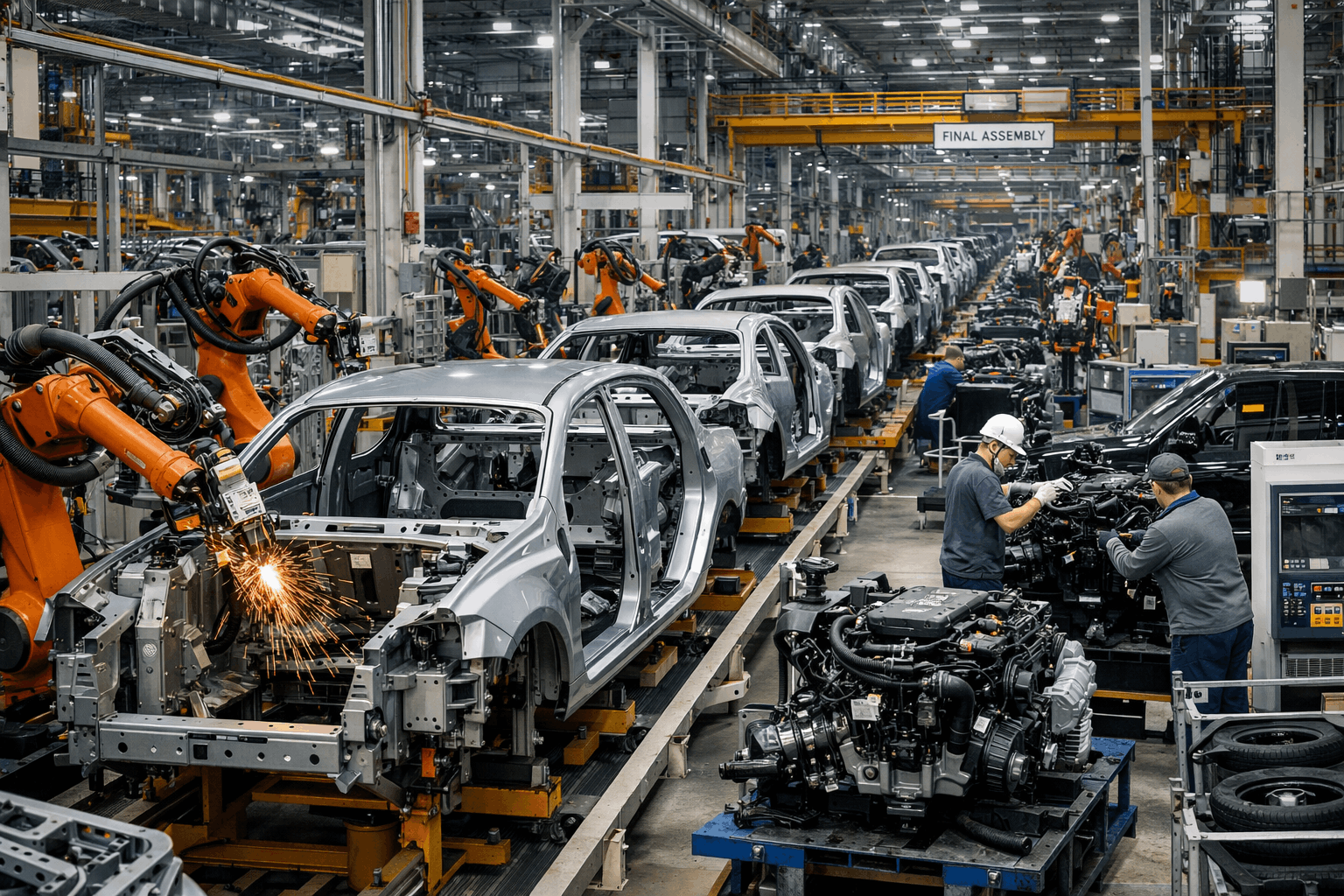
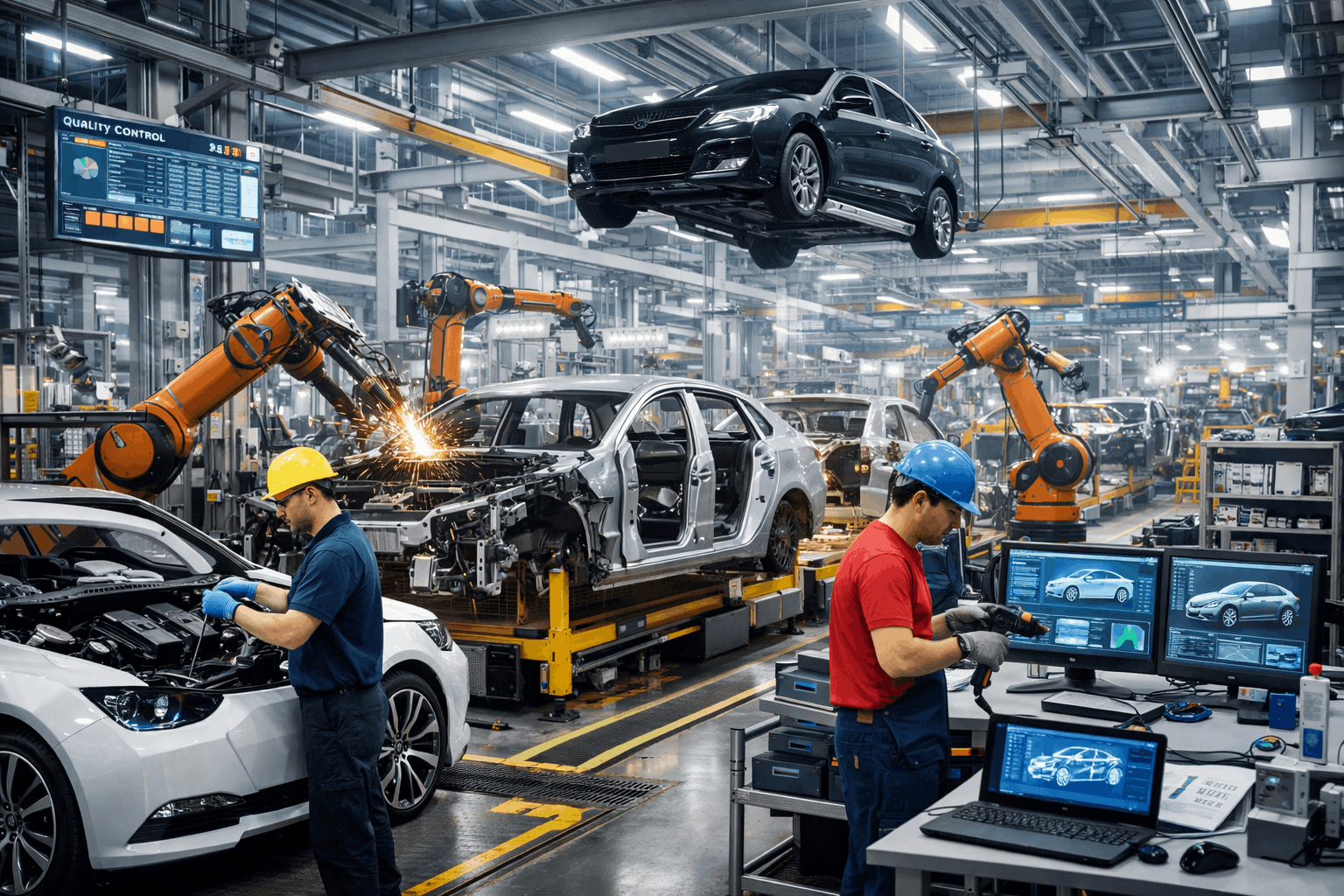
Manufacturing Engineering and Process Optimization Beyond product engineering, Savegen offers manufacturing process design—line layout, automation, robotic cell programming, assembly fixturing, tolerancing strategies, and quality control processes. The company emphasizes lean manufacturing, Six Sigma practices, and digital factory concepts (digital twins, MES integration) to reduce cycle times, improve yield, and lower total cost of ownership for customers.
Savegen provides materials selection and structural optimization services to achieve weight reduction while maintaining structural integrity. This includes the use of high-strength steels, aluminum, magnesium alloys, and composites; topology optimization; and lifecycle analysis to assess environmental impact. The firm supports suppliers and OEMs in meeting increasingly stringent CO2 and emissions regulations through lightweighting and material substitution strategies.
At project inception, Savegen conducts market and technical feasibility assessments, competitive benchmarking, requirements definition, concept trade-offs, and cost modeling. The firm prepares high-level system architectures and project roadmaps aligned with client business objectives and regulatory constraints.
Detailed Design and Engineering Savegen executes detailed mechanical, electrical, and software designs with clear deliverables: CAD models, BOMs, interface control documents, software requirements/specifications, and verification plans. The company adheres to change-control processes and cross-disciplinary design review practices to ensure integration across subsystems.
Using in-house rapid prototyping capabilities and a network of manufacturing partners, Savegen produces functional prototypes for validation. Rapid iteration cycles—combining virtual simulation and physical testing—accelerate design validation and reduce late-stage surprises.
Testing and Validation Robust validation programs are central to Savegen’s services. The firm conducts component and system-level testing: bench testing, environmental testing (temperature, humidity), vibration and shock, electromagnetic compatibility (EMC), crash and safety testing, range and charge performance for EVs, lifecycle and durability testing, and HIL/SIL exercises for control software. Validation is performed to international standards (e.g., FMVSS, UNECE, ISO) and tailored to market-specific regulations.