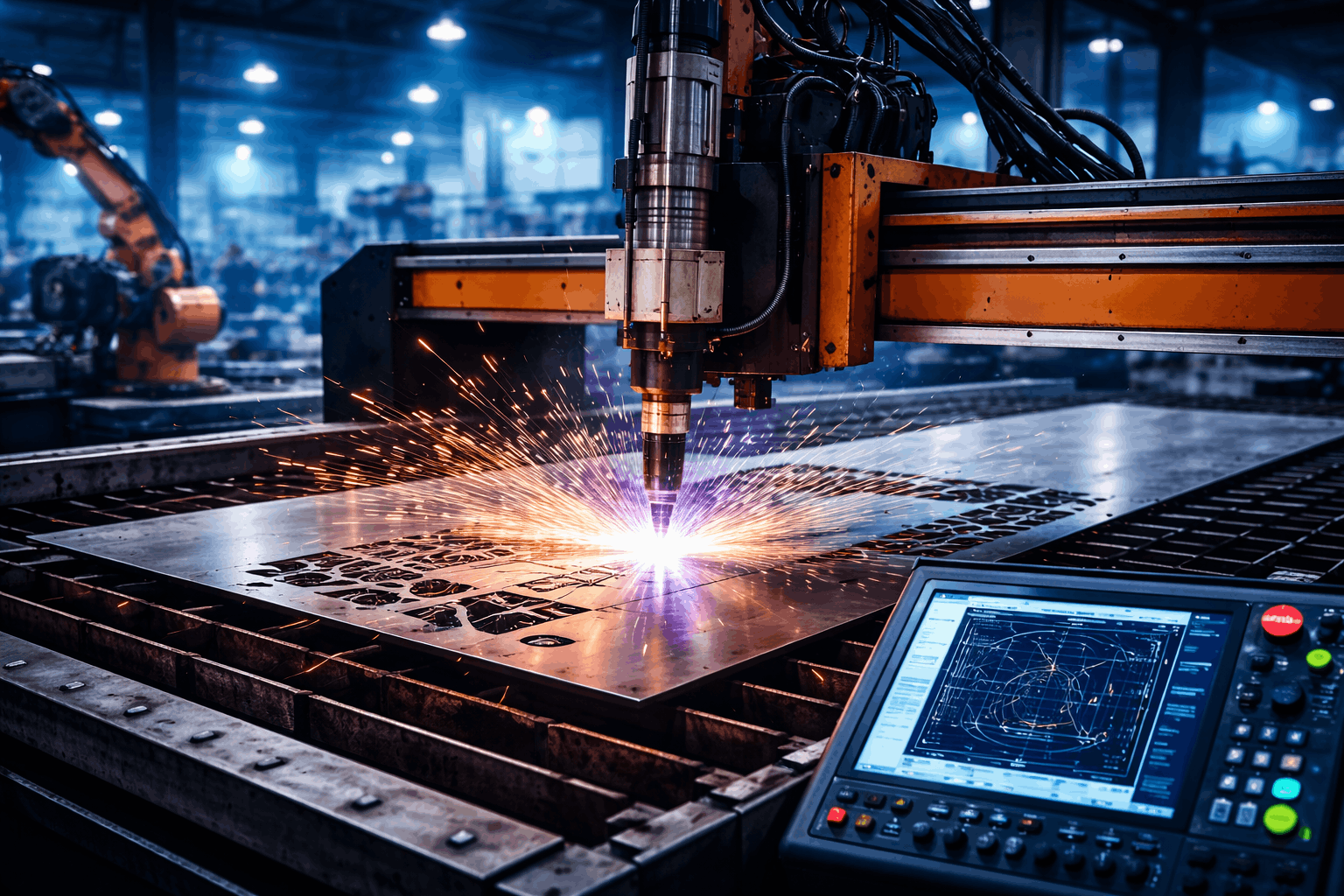
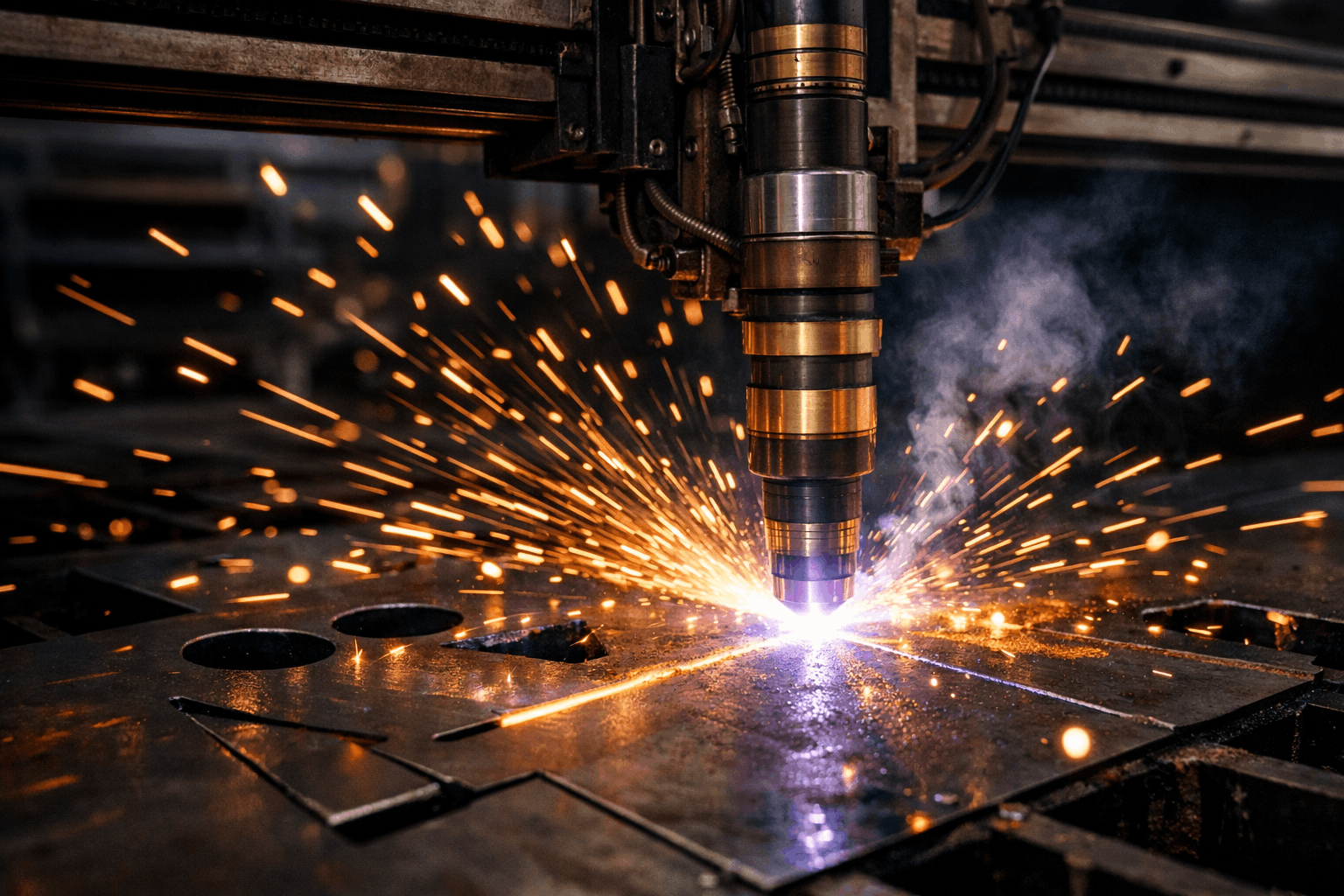
Principles of plasma cutting Plasma cutting is a thermal process that uses an electrical arc to ionise a gas (air, oxygen, nitrogen, or other gases) into a plasma jet. The plasma jet reaches extremely high temperatures and high velocity, melting and blowing away the metal in the cut zone. When combined with computer numerical control (CNC), plasma cutting enables automated, repeatable, and precise cutting of sheet and plate metals according to digitally programmed toolpaths.
Materials and thicknesses CNC plasma cutting is especially well suited to conductive metals: mild/structural steel, stainless steel, aluminium, copper and brass. Depending on plasma system type and power, materials from thin gauge sheet up to substantial plate thicknesses (commonly up to 25–50 mm for high-power systems) can be processed effectively. Savegen Engineering calibrates process parameters to material type and thickness to optimise cut quality, edge squareness, kerf width, and to minimise dross.
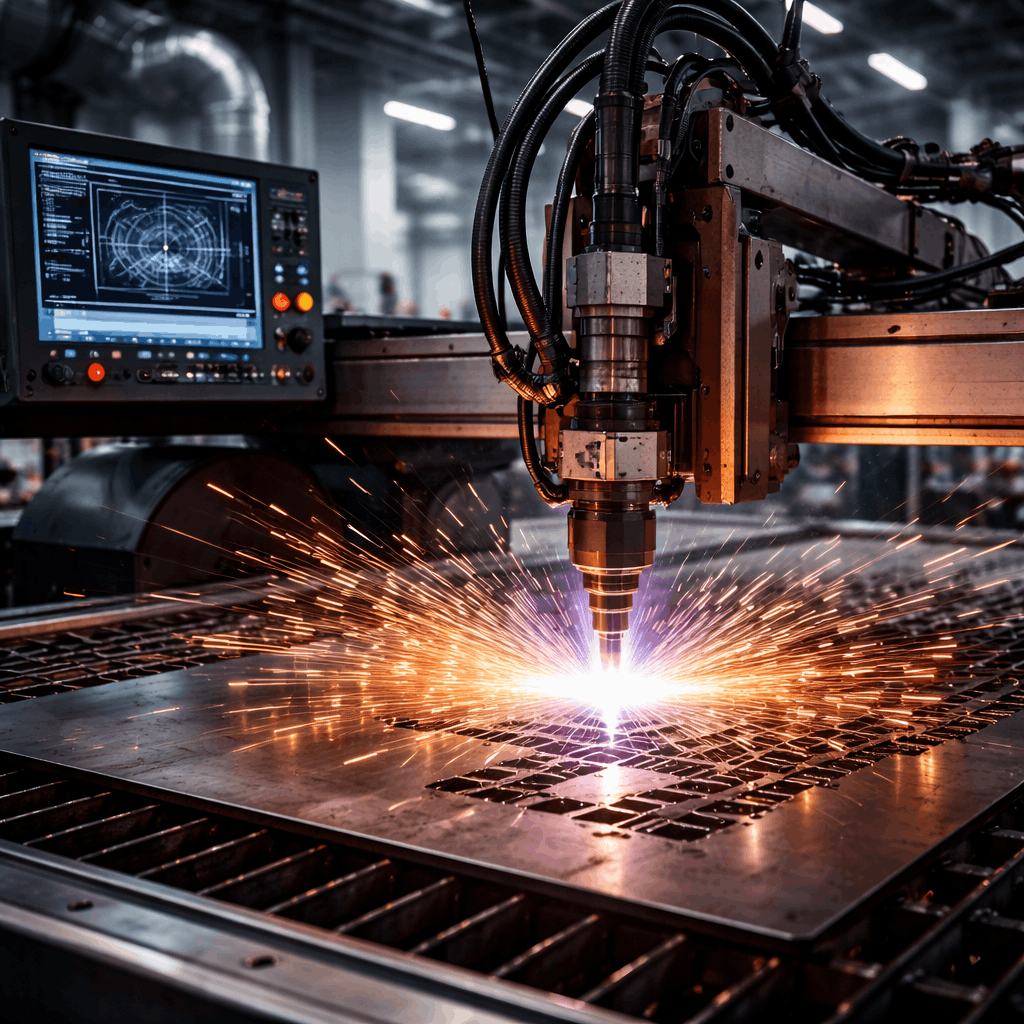
Speed and efficiency: Plasma cutting is faster than oxy-fuel for thin-to-medium thickness carbon steels and significantly faster than many mechanical cutting methods. This reduces lead times and per-part cost for production runs.
Flexibility: CNC integration allows rapid switching between parts and nesting strategies for efficient material utilisation.
Edge finish and tolerances While plasma cutting inherently produces a thermal edge with some HAZ and possible dross, Savegen minimises these effects through correct parameter selection, high-quality consumables, and post-cut finishing options (light grinding, edge dressing, or machining) when tighter tolerances or cosmetic edges are required. Typical dimensional tolerances achievable on flat plasma-cut parts are often within ±0.5–1.5 mm depending on material and feature size; Savegen documents achievable tolerances per material and thickness during quotation.
Secondary services and value-adds
Quality Management and Safety
Quality assurance procedures Savegen maintains quality systems focused on repeatability and verification:
Health, safety and environmental controls Operation of high-power plasma equipment involves electrical, thermal and fume hazards. Savegen implements comprehensive controls:
Economic and Project Considerations
Cost drivers Customers should understand principal cost factors: material type and thickness, part complexity and nesting efficiency, required tolerances and edge finish, piercings and small-diameter holes (which increase piercing time), and any secondary operations. Savegen provides cost transparency and options to trade off speed, finish and unit price.
Lead time and scalability Savegen is positioned to handle one-off prototypes through to medium-volume manufacturing runs. Scalability is achieved through shift sequencing, machine capacity planning, and strategic nesting. For very large or highly time-sensitive programs, Savegen coordinates production plans and may propose staggered deliveries or subcontract arrangements as needed.
Design for Manufacture (DfM) guidance Savegen collaborates with clients to optimise designs for plasma cutting:
Comparative Positioning: CNC Plasma vs Alternative Cutting Methods
Strengths relative to laser cutting
Limitations relative to laser and waterjet
Industry Use Cases and Sectors Served
Industrial fabrication and construction Structural steel components, plate gussets, mounting brackets and architectural metalwork are typical plasma-cut deliverables used in construction, structural fabrication and heavy equipment manufacture.
Automotive and transport Prototype brackets, chassis components, and tooling plates can be rapidly produced for vehicle development and small-batch manufacturing.
Mining, oil & gas and heavy plant Large plate components, flanges and brackets for heavy plant frequently benefit from plasma cutting’s throughput on thicker sections.
Agricultural and OEM manufacturing Farm machinery parts, frames and wearable components where robustness and cost control are priorities.
Support for research, prototyping and art installations Savegen works with designers and research labs for one-off fabrications, artistic installations and bespoke architectural features where fast turnaround and creative geometries are required.
Case Management and Client Collaboration
Project intake and scoping Savegen uses a structured intake process: review of part files (DWG, DXF, STEP where applicable), material specifications, tolerances, surface and post-processing requirements, and delivery schedule. Early-stage feedback identifies potential manufacturability issues and cost-saving opportunities.
Sample runs and first-article inspections For new parts, Savegen offers sample cutting and first-article inspection to validate parameters and confirm fit and finish prior to full production. This reduces downstream rework and supports approval cycles for regulated industries.
Communication and project tracking The company provides regular status updates, digital proofs of nesting and cutting plans, and proactive notifications when material lead times or technical constraints may affect schedule or cost.
Savegen Engineering’s CNC plasma cutting specialisation represents a pragmatic balance of speed, capability and cost-effectiveness for a wide range of metal-cutting applications. Their core strengths lie in equipment investment, experienced process control, comprehensive service offerings (from nesting and precision cutting to beveling and post-processing), and robust quality and safety systems. For clients requiring rapid, repeatable cutting of conductive metals—especially mild steel and thicker plate—Savegen delivers an attractive combination of technical competence and operational flexibility. Where tighter tolerances or thermally sensitive materials are required, Savegen’s consultative approach helps clients select the optimal cutting method or integrate additional finishing processes to meet specification. Overall, Savegen Engineering positions itself as a capable production partner for manufacturers, fabricators and designers seeking reliable CNC plasma cutting services with professional project support.
High-frequency or pilot-arc plasma power supplies offering consistent arc initiation and better performance on painted, rusted or oxidised surfaces.
Automated torch height control (THC) systems and true-arc voltage sensing to maintain optimal standoff and produce consistent cut quality across flatness variations.
Parameter optimisation: Operators select gas types, pressure, amperage, cutting speed and piercing routines to match the material and geometry, balancing edge quality, taper, and productivity.
Material handling and preparation: Procedures for cleaning, flattening and fixturing reduce sources of distortion and ensure consistent results.
Quotation and materials management Savegen provides detailed, transparent quotations that include material cost assumptions, machine time, consumables, and any required secondary operations. They can procure common metal grades on behalf of clients or work with customer-supplied material, applying incoming material inspection and traceability where required.
Precision cutting and nesting Services include single parts, small-batch production, and large-volume runs. Nesting software is used to maximise yield from sheet stock and reduce scrap. For orders requiring short lead times, Savegen can prioritise jobs and run overnight or extended shifts as needed.
Bevel and weld-prep cutting For fabrication shops and structural applications, Savegen offers bevel cutting for weld preparation. CNC plasma beveling creates controlled bevel angles and land specifications to support groove welding procedures, reducing downstream welding time and improving joint quality.
Piercing and micro-features Advanced plasma sources and torch control enable reliable piercing without excessive heat-affected zone (HAZ) spread. Small holes, slotted features and internal contours are managed through optimized lead-ins, high-frequency piercing routines, and support fixtures to prevent part movement.